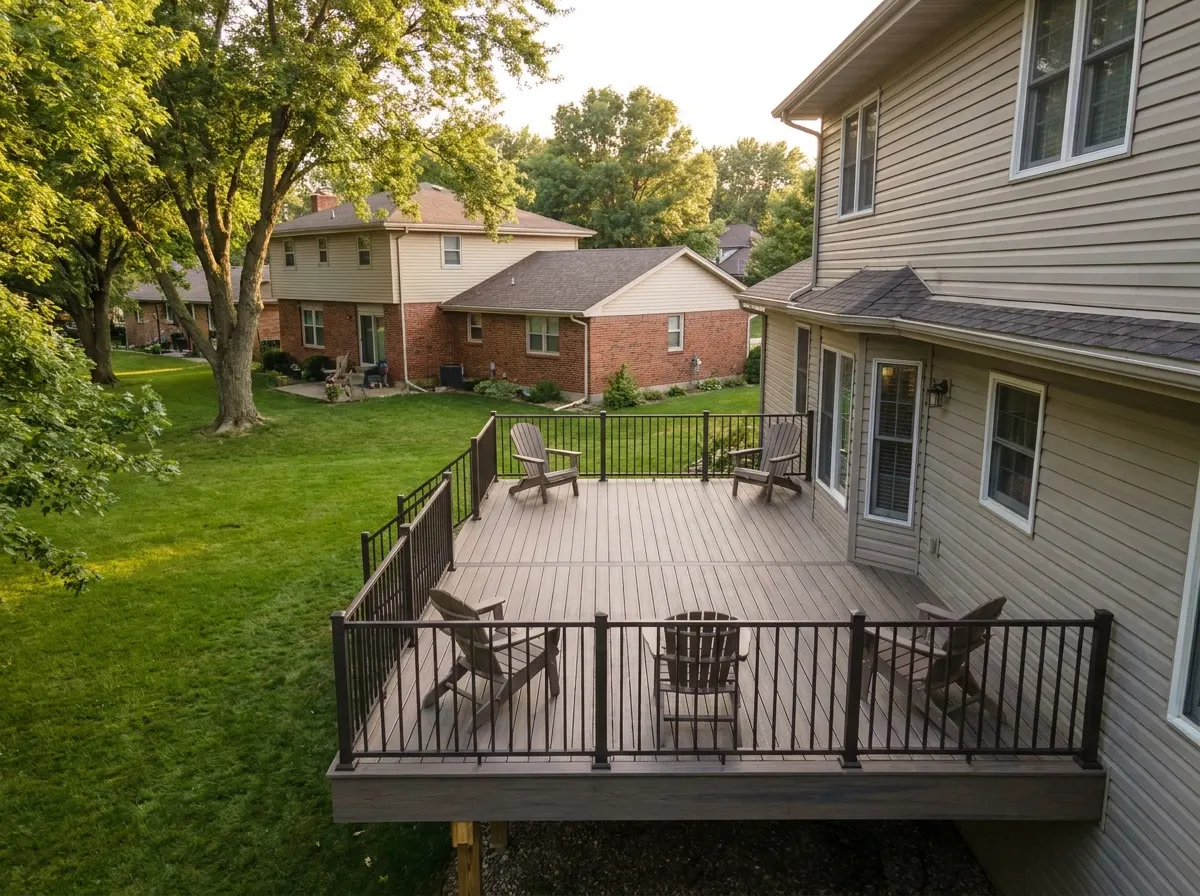
What composite decking actually is
Composite deck boards are not solid plastic and they are not solid wood. According to the USDA Forest Products Laboratory, most wood-plastic composite decking is roughly half wood by weight, using wood flour mixed with a plastic such as polyethylene, polypropylene, or PVC. The result is a board that behaves differently from solid lumber in ways that matter for installation and long-term care.
People searching for composite deck builders sometimes have a specific brand in mind. Trex is one example of a composite decking brand that homeowners commonly search for, though there are others. A local contractor can talk through what is available and what suits your project.
How composite decking moves, and what that means
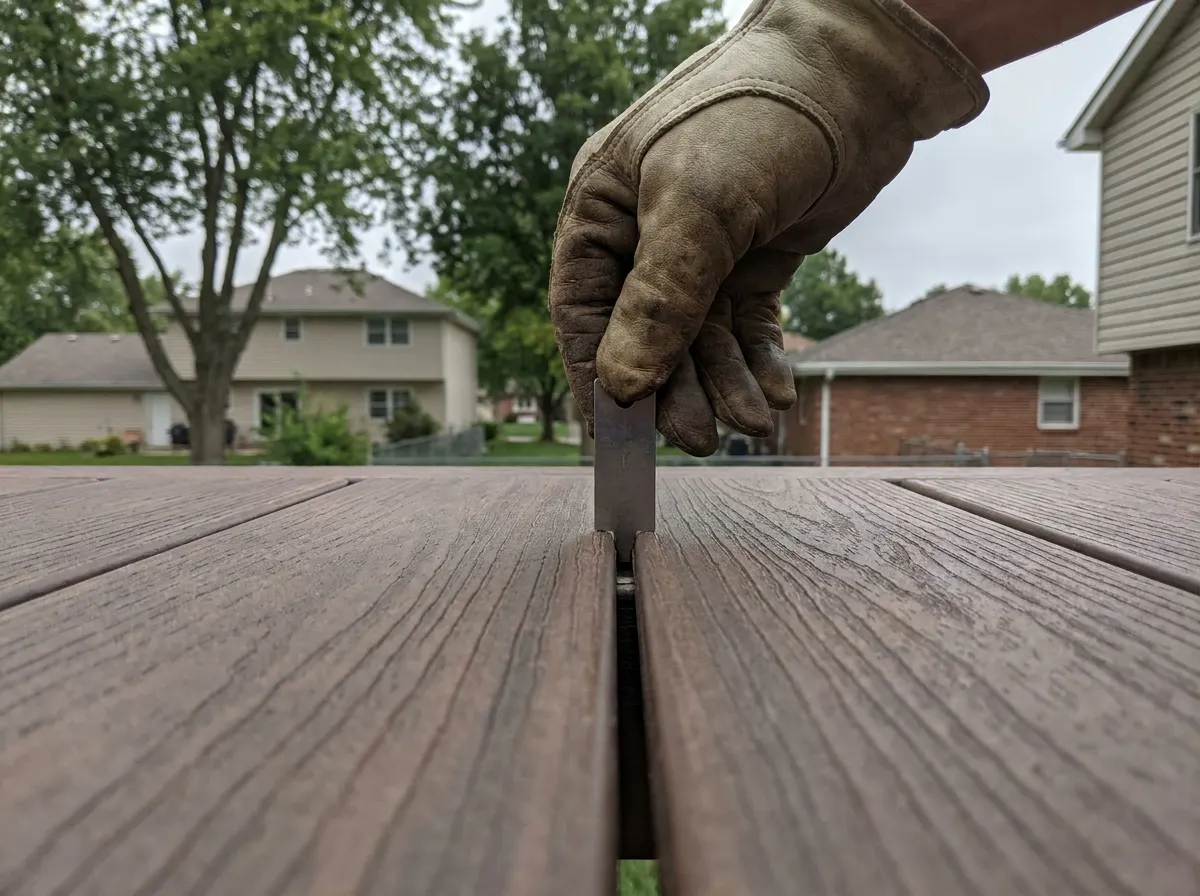
Wood and composite boards both move, just for different reasons. The Forest Products Laboratory explains that wood swells with moisture but barely with temperature. Composites do the opposite: the plastic component expands and contracts with heat and cold, while the wood flour inside is less temperature-sensitive. That movement is predictable but it has to be accounted for during installation, which is one reason the manufacturer's instructions matter.
On durability, the Forest Products Lab found that composites can still decay over the long term once moisture opens tiny cracks in the plastic. That comes after an early period of about 1 to 7 years with little damage.
Code requirements for composite decking in Omaha
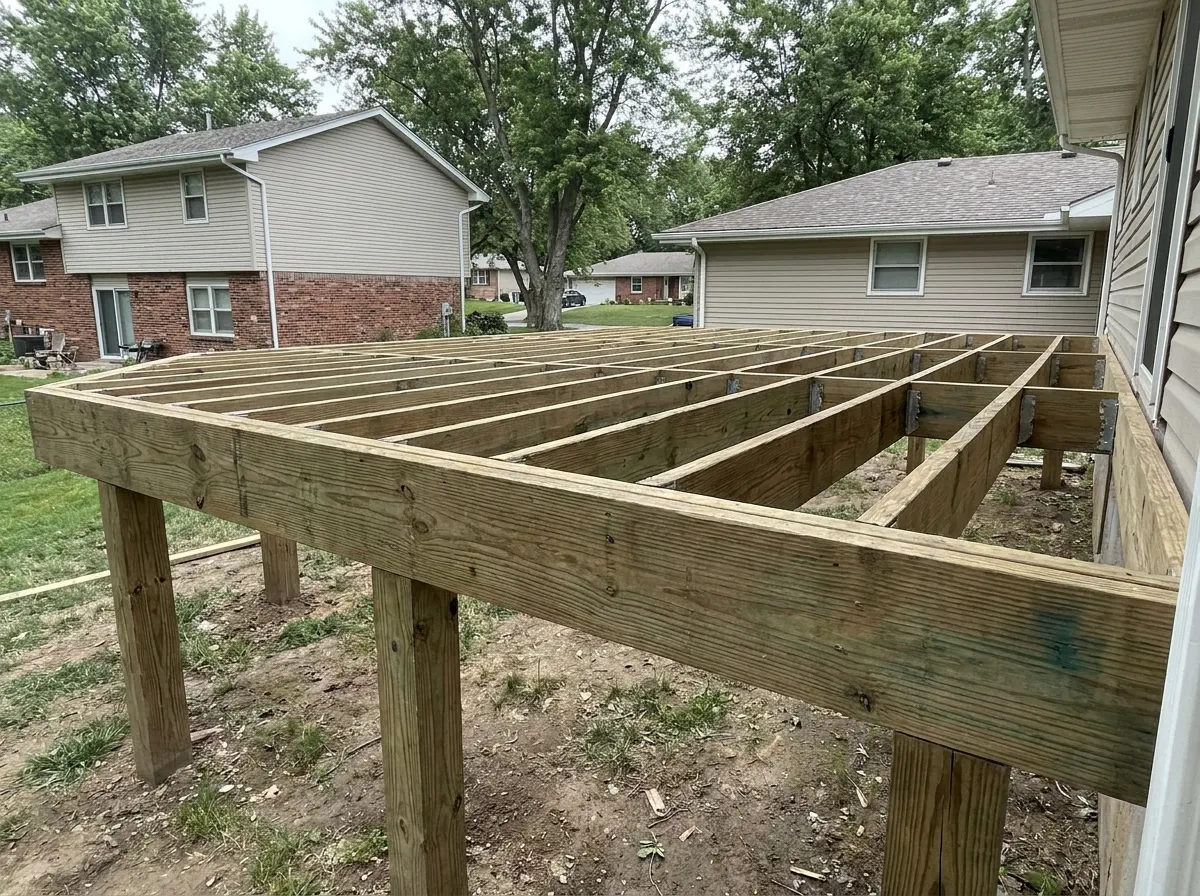
Composite deck boards used in Omaha must meet ASTM D7032 and be labeled with their allowable load and maximum span. The boards also have to be installed according to the residential code and the manufacturer's instructions, and Omaha's deck guide requires the install manual to be on site for the inspector.
Span matters more than many homeowners expect. One manufacturer's evaluation report, as an example, allows its 1x6 boards a 16-inch span when installed at 90 degrees to the joists, but only 8 inches at a 30-degree angle. That is one manufacturer's report for one product. Ask your composite deck builder what your specific board allows before the framing is set.
The framing underneath composite decking is still wood. Omaha requires that framing to be naturally durable or pressure-treated. Composite boards are the surface only.
You deserve a deck that doesn't look worse every spring.
Wood grays, splinters and warps. You've sanded and sealed it more times than you can count, and it still looks tired.
A good local deck builder can walk you through composite boards and build it right. The right contractor handles the permit and inspections so you don't have to.
Talk to a Deck BuilderYour call goes straight to one of the top-rated deck builders in the Omaha area. Free quote, no pressure. Call (402) 999-4636
The permit and inspection process
A composite deck in Omaha goes through the same permit process as a wood deck. Every new deck and deck replacement needs a permit. The permit application includes a site plan, a cross section, and a footing layout.
Omaha's three inspections apply: footing, framing, and final. An attached deck needs footings that reach 42 inches below grade, per Omaha's frost-line requirement. Guardrails at least 36 inches high are required on any deck more than 30 inches above the ground, with no gap a 4-inch ball can pass. Stairs with more than three risers need a handrail. Your contractor should confirm the current rules with Omaha Permits and Inspections (402-444-5350, OmahaPermits.com).
Before any footing is dug, Nebraska law requires a free Nebraska811 locate request (call 811) at least two full business days ahead.
Composite vs. wood: trade-offs to consider
Neither material is the right answer for every homeowner. A contractor can help you think through the trade-offs.
Wood decks need regular finishing to slow weathering, and the USDA Forest Products Laboratory recommends penetrating finishes rather than paint or solid stain, which can blister and peel.
Composite boards move with temperature and can still decay over the long term, so they still need care. Price, looks and upkeep vary by product, so ask a contractor to price both on the same deck.
What affects the cost of either option includes deck size, height above grade, the number of stairs and landings, railing style, framing complexity, and permit fees.
Choosing a composite deck builder in Omaha
Deck contractors in Omaha need a City of Omaha Class E contractor license, with insurance and a bond on file with the city. Ask for the license number and verify it with Permits and Inspections. Nebraska contractors must also register with the Nebraska Department of Labor (dol.nebraska.gov).
Get at least three written estimates covering the same scope: framing species and grade, the composite decking product specified, railing system, stair details, and permit costs. A written contract should include all of that plus a finish date and payment terms. Pay a reasonable down payment and hold final payment until the work passes inspection and is complete. The BBB of the Midwest Plains, with an office in Omaha, is a useful place to check contractor history.
Weighing wood too? See deck builder in Omaha and deck staining in Omaha.
Frequently asked questions
Is composite decking allowed in Omaha?
Yes. Composite deck boards must meet ASTM D7032 and be labeled with their allowable load and span. The framing underneath must still be naturally durable or pressure-treated wood. The permit and inspection process is the same as for a wood deck.
Does the framing under composite decking need to be treated?
Yes. Omaha requires the framing to be naturally durable or pressure-treated regardless of what the deck surface is made of. Composite boards cover the top, but they do not change what the code requires below.
Do I still need three inspections for a composite deck?
A composite deck in Omaha gets the same three inspections as a wood deck: footing, framing, and final. Your contractor pulls the permit and schedules the inspections. Call or fill out the form to get connected with a local deck builder who handles the full process.
Time to stop patching and start enjoying.
Call now or fill out the form and get connected with one of Omaha's top-rated deck builders.