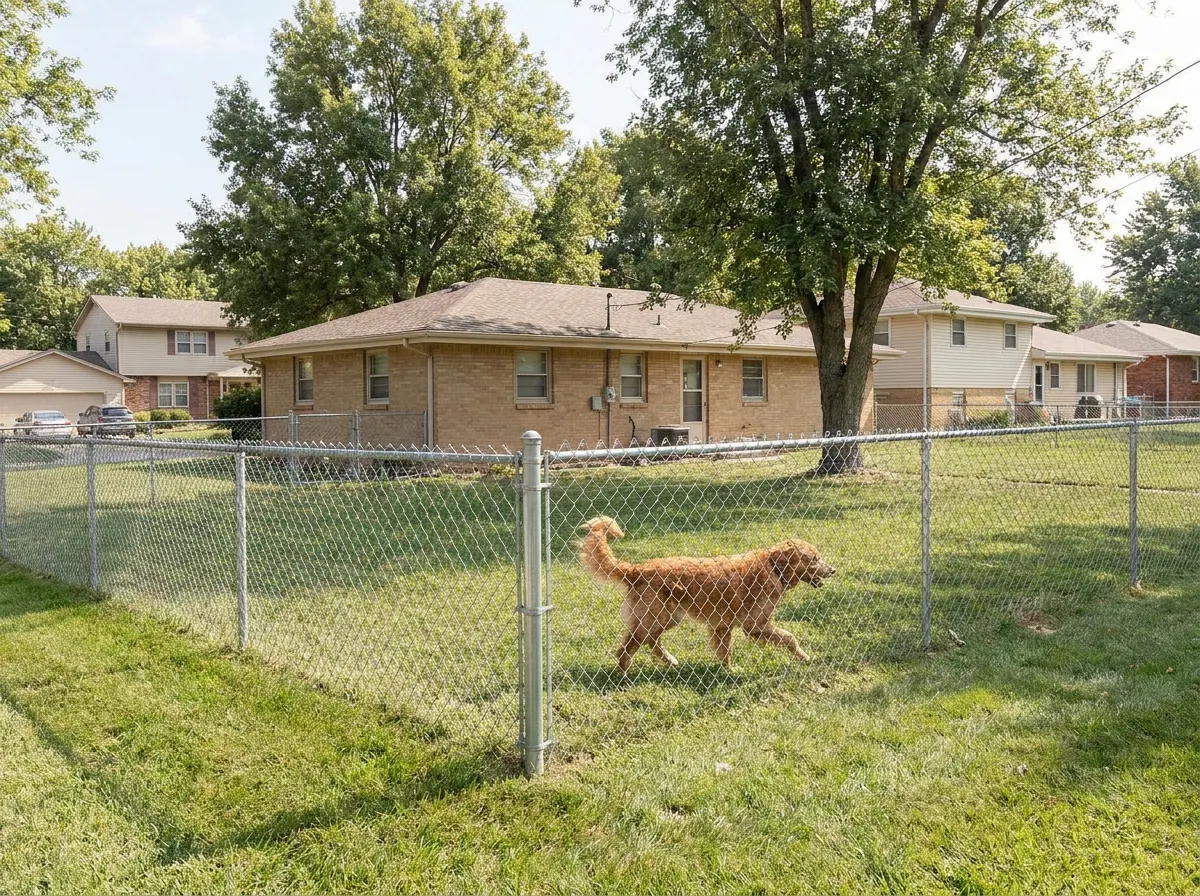
Why homeowners in Omaha choose chain link
Chain link is open by nature, which makes it one of the fence types that fits Omaha's front-yard rule. Omaha requires any fence in a front yard or street-side yard to be at least 50 percent open and no taller than 4 feet. Chain link is open by design, so it fits the openness rule as long as it stays at 4 feet or under in the front yard.
In the back and side yards, chain link can go up to 6 feet. Homeowners use it to keep dogs in, keep wildlife out, and define property lines without blocking light or airflow. It is also a common choice for pool enclosures, where the opening size and gate hardware have to meet specific code requirements.
Omaha's rules for chain link fences
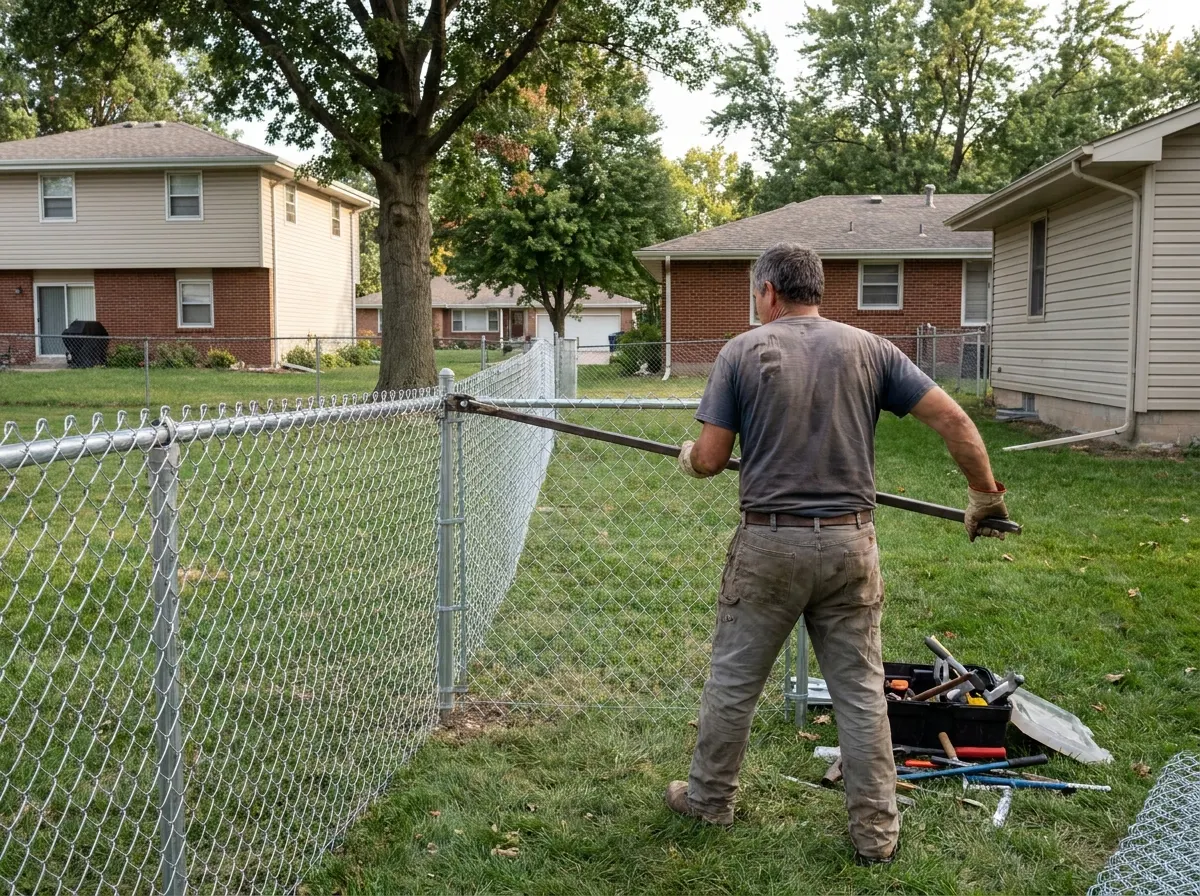
Every fence in Omaha requires a permit, including chain link (Sec. 43-172). The permit application asks for fence type, height, percent open, and the distance from the fence to each property line. Apply online at OmahaPermits.com or call 402-444-5350.
Heights: up to 4 feet in a required front yard, up to 6 feet anywhere else on a residential lot (Sec. 55-786, amended 2024).
The finished or smooth side of a fence faces the neighbors and the street. For chain link, Omaha's code specifies that the twisted, barbed edge faces the ground, not the top.
On corner lots, no solid fence can go inside the 30-foot sight triangle at the intersection. Ask the city how the sight-triangle rule applies to your corner, and keep every fence inside your surveyed lot lines. Your contractor should confirm the current rules before installation begins.
Many Omaha-area subdivisions have covenants or an HOA that set fence style, height, or color. Check yours before you build. City approval and HOA approval are separate.
If your lot has an easement, check your plat and with the city before setting posts in it.
Chain link for pool barriers
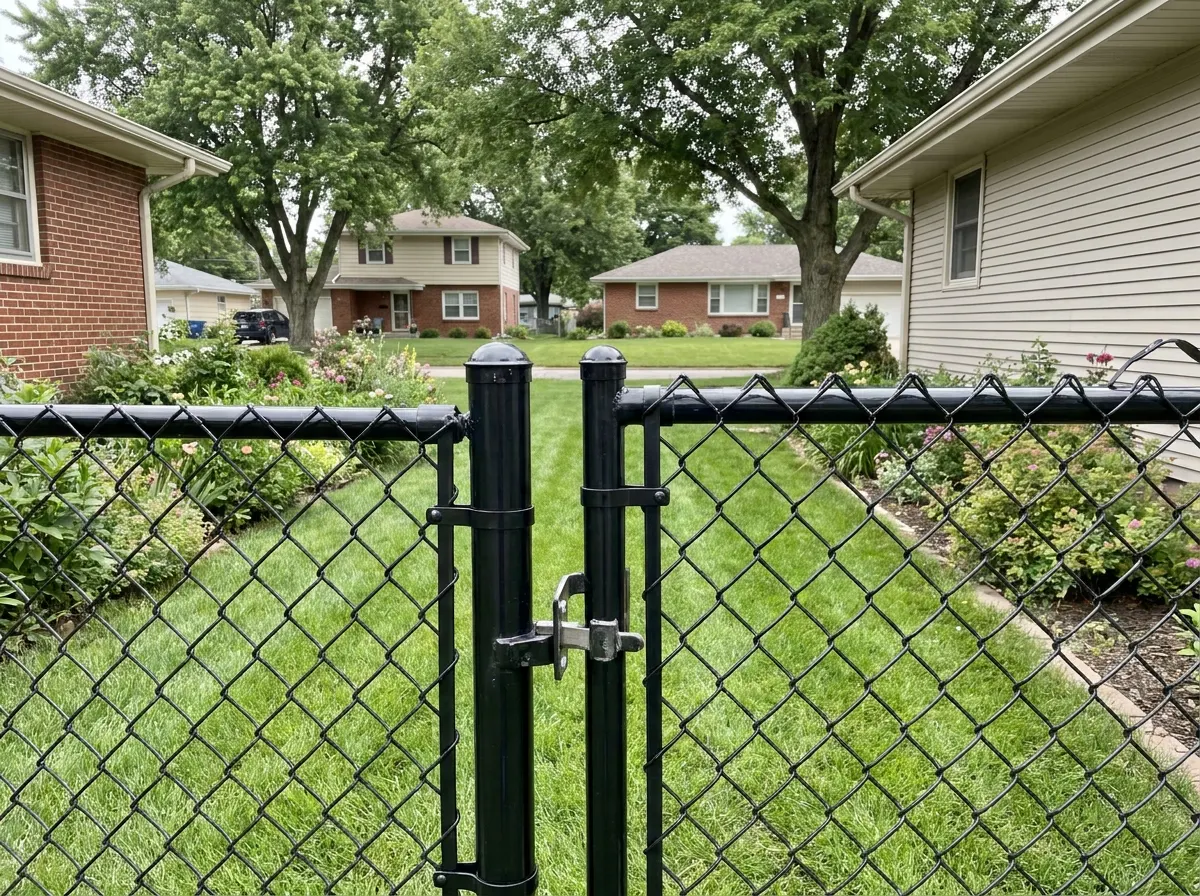
Omaha requires every outdoor residential pool to be fenced. For an in-ground pool, the barrier must be at least 5 feet 7 inches tall. For an above-ground pool, 48 inches. No opening can allow a 4-inch ball to pass. Gates must self-close and self-latch, with the latch at least 45 inches up, swinging away from the pool (city code rewritten November 2025).
Papillion and La Vista require a 6-foot pool fence.
If chain link is the pool barrier, the opening size matters. The 2018 International Swimming Pool and Spa Code, which La Vista follows, caps chain link openings at 1-3/4 inches. Omaha's own pool rule is the 4-inch-ball standard. Check your city, and your contractor should confirm the current rules before specifying the fabric.
Galvanized vs. vinyl-coated chain link
Chain link fence installation in Omaha typically involves one of two fabric types.
Galvanized chain link is covered by ASTM A392, which means the wire is zinc-coated before or after weaving. It has a silver-gray appearance.
Vinyl-coated chain link, also called polymer-coated, is covered by ASTM F668. In that process, the wire is coated before weaving, over a metallic coating underneath. It comes in colors, most commonly green or black. Some homeowners choose it because it blends into a yard better than bare galvanized wire.
A contractor can walk through the trade-offs for your specific situation.
The dog is escaping again and the yard doesn't feel safe for the kids.
A gap in the fence, or no fence at all, means you're watching the gate every single minute. That worry adds up fast, especially near a pool or a busy street.
A properly installed chain link fence keeps the dog in and the yard yours. A good local fence contractor makes sure it sits straight and meets city rules.
Talk to a Fence ProYour call goes straight to one of the top-rated fence contractors in the Omaha area. Free quote, no pressure. Call (402) 999-4636
Before digging: call 811
Chain link fence installation requires setting posts in the ground. Nebraska law requires a free Nebraska811 locate request (call 811) at least two full business days before any digging starts. This applies to every fence job, regardless of size.
What affects the cost
Factors that shape the price of a chain link fence include the total linear footage, the fence height, the gauge and coating of the fabric, the number of gates and their hardware, the post spacing and footing depth, and whether any grading or site prep is needed. Pool-barrier gates with self-closing and self-latching hardware add to the cost. Permit fees are set by the city.
Choosing a fence contractor in Omaha
Fence contractors in Omaha need a City of Omaha Class E contractor license, with insurance and a bond on file with the city. Ask for the license number and confirm it with Permits and Inspections before anyone starts work.
Nebraska contractors must register with the Nebraska Department of Labor (dol.nebraska.gov). Registration does not ensure quality, but it is a starting point.
Get at least three written estimates on the same scope: fabric gauge and coating, post size and spacing, gate count and hardware, and permit costs. A written contract should cover the work, the materials, the finish date, the total price, and contact information. Pay a reasonable down payment and hold final payment until the job is done. The BBB of the Midwest Plains, with an office in Omaha, is a useful resource for checking contractor history.
Comparing fence types? See fence installation in Omaha and privacy fence in Omaha.
Frequently asked questions
Does chain link still need a permit in Omaha?
Yes. Every fence in Omaha requires a permit, including chain link. The application asks for fence type, height, percent open, and setbacks from the property lines. Apply at OmahaPermits.com or call 402-444-5350. Your contractor should confirm the current requirements.
Can I use chain link as a pool fence?
Chain link can work as a pool barrier, but the opening size and gate hardware have to meet your city's specific requirements. Omaha's rule is no opening a 4-inch ball can pass. La Vista follows the 2018 International Swimming Pool and Spa Code, which caps chain link openings at 1-3/4 inches. Check with your city, and make sure your contractor knows which standard applies to your project.
What is the difference between galvanized and vinyl-coated chain link?
Galvanized chain link uses zinc coating on the wire and has a silver-gray look. Vinyl-coated chain link adds a polymer layer over a metallic coating and comes in colors like green and black. Both are covered by separate ASTM standards. A local fence contractor can help you decide which makes sense for your yard and budget.
A secure yard is one call away.
Call now or fill out the form and get connected with one of Omaha's top-rated fence contractors.